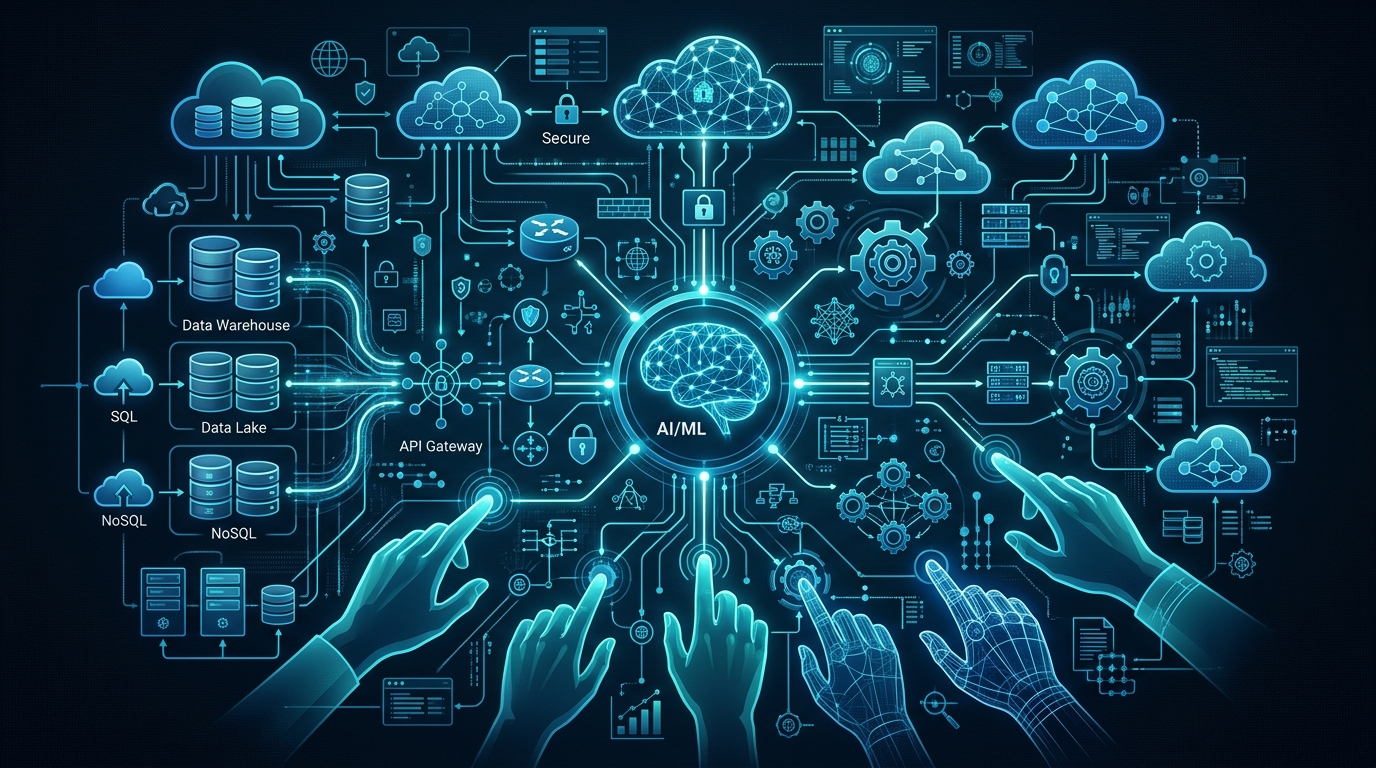
In the wake of generative AI’s rapid ascent, a common narrative has emerged across engineering boards: Will AI replace the enterprise architect? After all, modern Large Language Models (LLMs) can generate clean code, scaffold API configurations, and even draft OpenAPI specifications in seconds.
However, as veteran integration architects, we know that code generation is only a fraction of system design. When it comes to large-scale, high-compliance, and mission-critical enterprise environments, AI models are fundamentally unequipped to design integration architectures.
True architecture is not about pasting boilerplates; it is about custom-modeling complex business domain realities from scratch. In this article, we will examine the structural limitations of automated models and why human-centric design remains indispensable.
1. The Fallacy of AI Pattern Matching
AI models operate on statistical pattern matching. They predict the next most likely token based on a vast dataset of existing, public code. While this is useful for generic utility scripts, it is dangerous for enterprise systems because:
- BESPOKE VERSUS GENERIC: No two enterprise landscapes are identical. Legacy systems, custom message queues, and proprietary databases require a bespoke design. AI forces systems into common patterns, even if those patterns introduce structural decay or security liabilities in your specific environment.
- BOUNDED CONTEXT BLINDNESS: In Domain-Driven Design (DDD), a “Customer” means something completely different in the Billing Context versus the Shipping Context. LLMs lack the situational awareness to identify and enforce context boundaries, frequently leaking models across domain contexts and creating tight coupling.
       [AI APPROACH: Shared Data Model]
       ┌──────────────────────────────┐
       │           Customer           │  <-- Leakage & High Coupling!
       └──────────────────────────────┘
          ▲                        ▲
    Billing System          Shipping System

       [HUMAN ARCHITECT: Bounded Contexts]
 ┌──────────────────────┐   ┌──────────────────────┐
 │   Billing Context    │   │   Shipping Context   │
 │ ┌──────────────────┐ │   │ ┌──────────────────┐ │
 │ │  BillingCustomer │ │   │ │ ShippingCustomer │ │
 │ └──────────────────┘ │   │ └──────────────────┘ │
 └──────────────────────┘   └──────────────────────┘
            ▲                           ▲
            └────[Translation Map]──────┘  <-- Bespoke Integration
2. Bounded Contexts & Technical Compliance
Enterprise systems run under heavy regulatory compliance (such as HIPAA, GDPR, or PCI-DSS). Designing for these constraints is not a simple matter of checking boxes; it requires balancing trade-offs between availability, consistency, and absolute security.
Consider a healthcare platform processing patient vitals:
- Data Sovereignty: Regulations require patient data to reside within specific geographical boundaries.
- Access Control: A complex web of role-based and attribute-based access controls (RBAC/ABAC) must govern every API.
- Safety-Critical Performance: A failure to deliver messages in real-time could impact human lives.
An AI model lacks a conceptual model of human life or regulatory liability. It cannot understand the ethical weight of a system crash, nor can it negotiate security rules with compliance officers. It only knows what is syntactically correct, not what is architecturally safe.
3. Designing from First Principles
When Sivadas K Ramdas designs an enterprise integration system, the process starts from a blank canvas. We look at:
- First-Principles Reasoning: Understanding the physical, network, and human constraints of the system.
- Aggregate Root Modeling: Setting precise transaction boundaries so that data remains consistent under heavy concurrency.
- Translational Integrity: Building anti-corruption layers (ACLs) to shield clean modern systems from legacy pollution.
These activities are highly collaborative, requiring deep human empathy, negotiation, and domain expertise. You cannot prompt your way to a highly resilient corporate architecture because the most important constraints are never written down in a prompt; they must be extracted through human interaction and deep experience.
The Verdict: AI is a powerful assistant for writing boilerplate code or translating data formats. But when it comes to organizing bounded contexts, establishing compliance guardrails, and safeguarding human lives, there is no substitute for seasoned human architects.